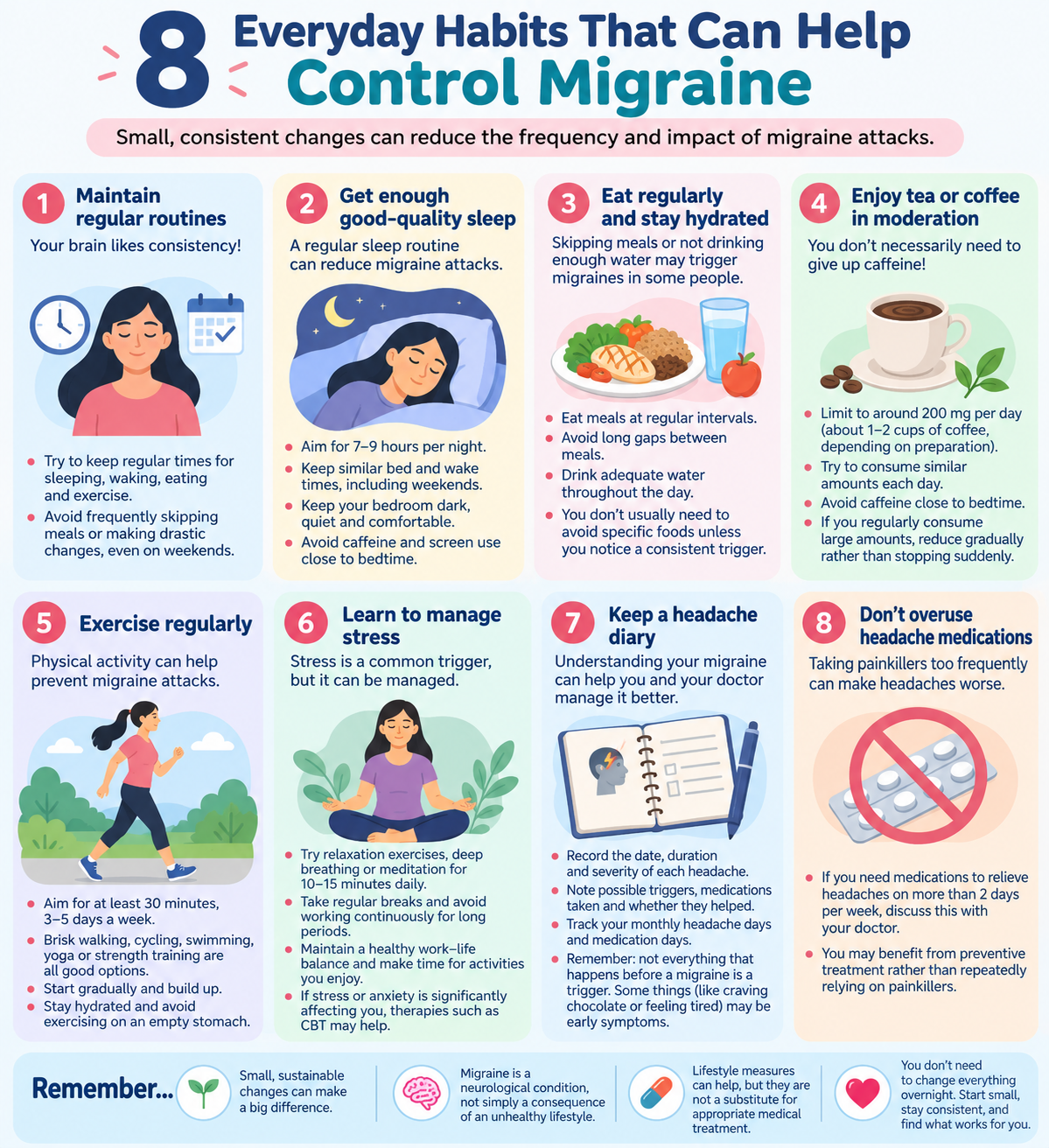
Hi, if you’ve been diagnosed with a migraine, there’s good news and there’s bad news!
The bad news first: Your drugs alone, probably won’t eliminate the headaches altogether.
But coming to more encouraging stuff: You can significantly reduce the headaches by a few routine practices you can do in your daily life! These, when combined with your drugs, can together help markedly reduce and even eliminate the headaches sometimes!
- Maintain a regular routine
Your brain likes consistency!
Have you ever noticed a migraine after sleeping late on a weekend, skipping breakfast, or having an unusually hectic day?
For some people, sudden changes in their daily routine can trigger a migraine attack.
Try to maintain a reasonably consistent schedule for sleeping, waking up, eating, and exercising. Avoid frequently skipping meals or making drastic changes to your sleep schedule, even on weekends.
Remember: You don’t need a perfectly timed routine. Small, sustainable changes are more useful than rigid rules that are difficult to follow.
2. Get enough good-quality sleep
Both too little sleep and sudden changes in sleep patterns can trigger migraines.
Try to get 7–9 hours of sleep each night and maintain consistent sleeping and waking times, including on weekends.
A few simple habits can help:
- Keep your bedroom dark, quiet and comfortable.
- Avoid caffeine close to bedtime.
- Limit late-night screen use, especially if it keeps you awake longer. If inevitable in some instances, try switching to night mode and reduce brightness to as minimum as possible.
- Avoid sleeping much longer than usual on weekends to make up for lost sleep.
3. Regular meals and hydration:
As a fellow migraneur myself, I get especially cranky on skipping meals altogether and many persons with a migraine have a headache on skipping meals or while being dehydrated.
So definitely try keeping a little snack and water bottle with you, especially while travelling or at work too; and keep hydrating!
Further some persons can have their headaches triggered by particular foods like chocolates but that depends from person to person. That’s why it’s vital to maintain a headache diary to understand if there is such a relation!
4. Should you stop drinking tea or coffee?
Good news! You don’t necessarily need to give up your morning cup of tea or coffee because you have migraine.
Caffeine can have both helpful and harmful effects on headaches. While small amounts may sometimes relieve headaches, excessive consumption and suddenly stopping your usual caffeine intake can trigger them.
Here are a few simple tips:
- Limit caffeine to around 1–2 cups of coffee.
- Try to consume similar amounts at roughly the same time each day.
- Avoid tea or coffee close to bedtime if they affect your sleep.
- If you regularly consume large amounts, reduce gradually rather than stopping suddenly.
Remember: The goal is moderation and consistency, not necessarily complete avoidance.
5. Regular exercise HELPS!
Studies have shown that regular exercise across various forms has shown to be beneficial for migraine.
Be it Yoga, going for a walk, working out at a gym, playing a sport; doing any of these regularly for 4-5 days a week has shown significant benefits across large trials.
6. Stress management
Any form of physical or mental stress can worsen migraine. The role of meditation, exercise or even ‘therapy’ can show marked benefits even with regards to your headache.
7. Keep a headache diary
Understanding your migraine is the first step towards managing it better.
A simple headache diary can help you and your doctor understand how frequently your migraines occur, how they affect your life, and whether your treatment is working.
Try recording:
- The date, duration and severity of each headache.
- Any medications taken and whether they helped.
- Possible triggers, such as missed meals, poor sleep or menstruation.
8. Don’t overuse headache medications
Did you know that taking headache medicines too frequently can actually make your headaches worse?
Frequent use of painkillers or migraine-relief medications can contribute to medication-overuse headache, making headaches more frequent and difficult to control.
As a general rule, if you need medications to relieve headaches on more than 2 days per week, discuss this with your doctor.
You may benefit from preventive treatment rather than repeatedly relying on painkillers.
So, to summarise:
1. Start your medication as advised by your doctor and give it time to act (atleast 4-8 weeks).
2. Maintain a headache diary: Understand what triggers your headache.
3. Make small and sustainable changes in your daily life (with the above 8 steps) that can help reduce your headaches further.
Leave a Reply