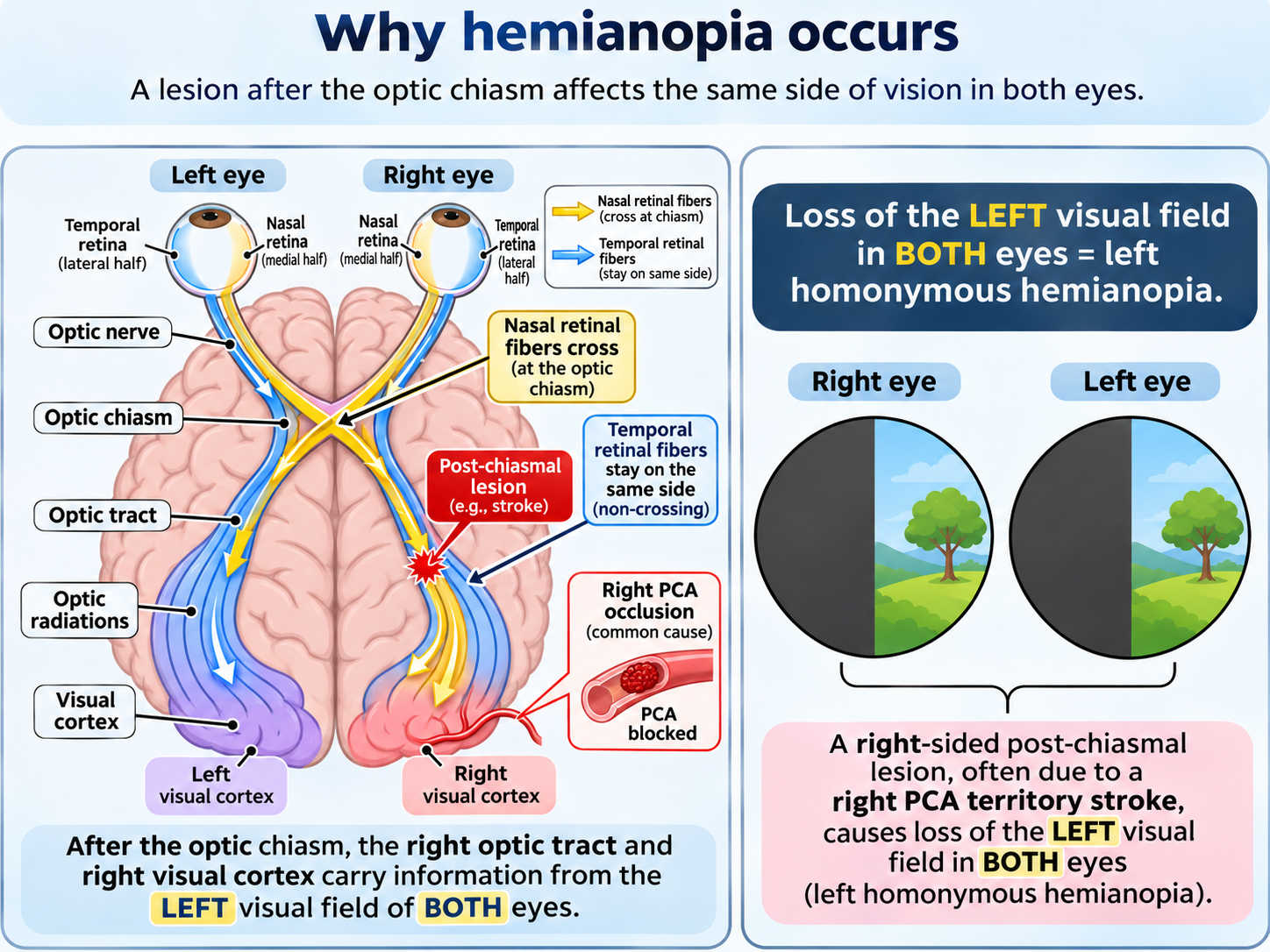
Hi, if you have suffered from a stroke or have a relative who has, one often under-recognised feature is inability to see one side of the visual field (with both eyes). This is called hemianopia.
It is commonly seen when one of your posterior circulation arteries (Posterior cerebral artery) is occluded or blocked in the stroke (or some other causes like tumors or swelling affect the same area). This is because: beyond a point called optic chiasma, the fibres of one visual field (right or left) from both eyes, converge into something called an optic tract; which then goes to the posterior part of your brain on that side. So if the stroke happens in this posterior part, the person is unable to see on the opposite visual field.
This can lead to a variety of problems- bumping into objects on that side, difficulty reading, problems in judging distances, work difficulties, issues with daily activities like driving especially.
So what can we do to help improve it?
Encouragingly, upto 50% patients have shown some degree of recovery in the first 6 months after a stroke.
However, only 10-20% regain almost full visual improvement.
What can we do to aid in the rehabilitation of these individuals to help them lead a better life?
Here are a few interventions which can realistically help:
A. Visual Scanning exercises:
Visual scanning involves deliberately moving the eyes, and sometimes the head, toward the side where vision has been lost. With practice, patients may become better at locating objects and noticing obstacles.
- Place several everyday objects on a table. Try to locate them one by one, deliberately searching toward the affected side.
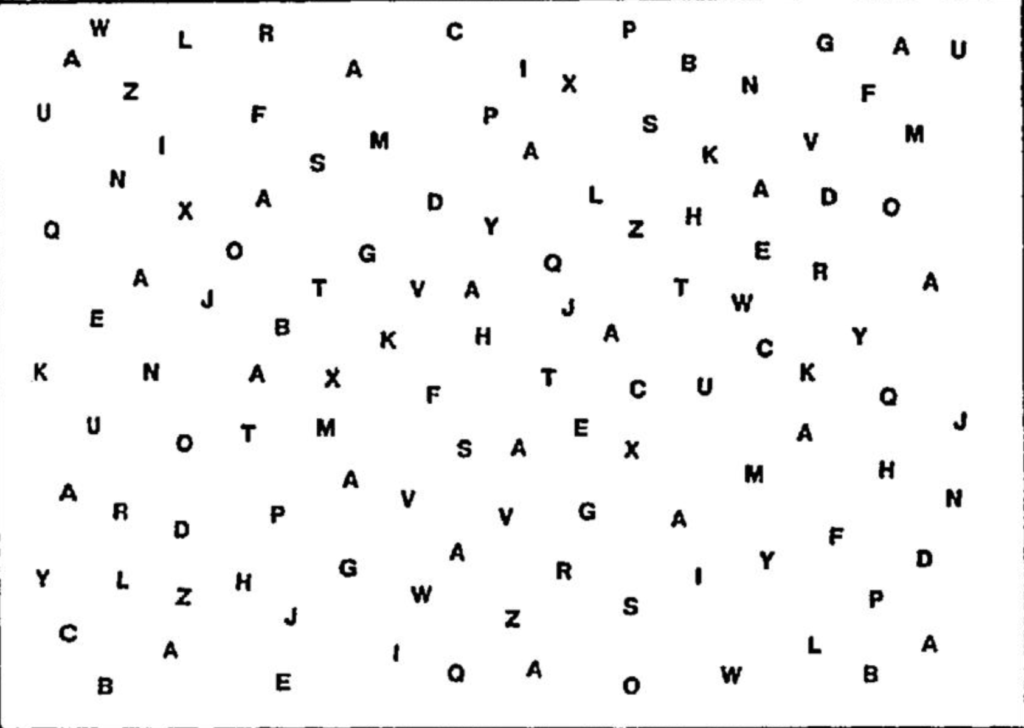
- On a sheet containing randomly arranged letters or numbers, try to find and mark a particular letter or number, scanning systematically across the page. (like the figure below)
- Practise checking the affected side while looking for objects, moving around a room, or approaching doorways.
B. Eye search:
A free app developed by UCL to train patients to identify objects and improve visual searching toward their affected side.
Click on this link to access and use this: https://eyesearch.neurospeechai.com/
This tool has shown improvements in visual search performance in cohort studies.
C. Read right:
Another app particularly for people with difficulty reading due to the vision problems. Most useful for those with right sided vision difficulty.
Unlike conventional reading, the words move across the screen from right to left. This encourages the eye movements required for reading.
Here’s the link: https://readright.neurospeechai.com/
D. Prism glasses
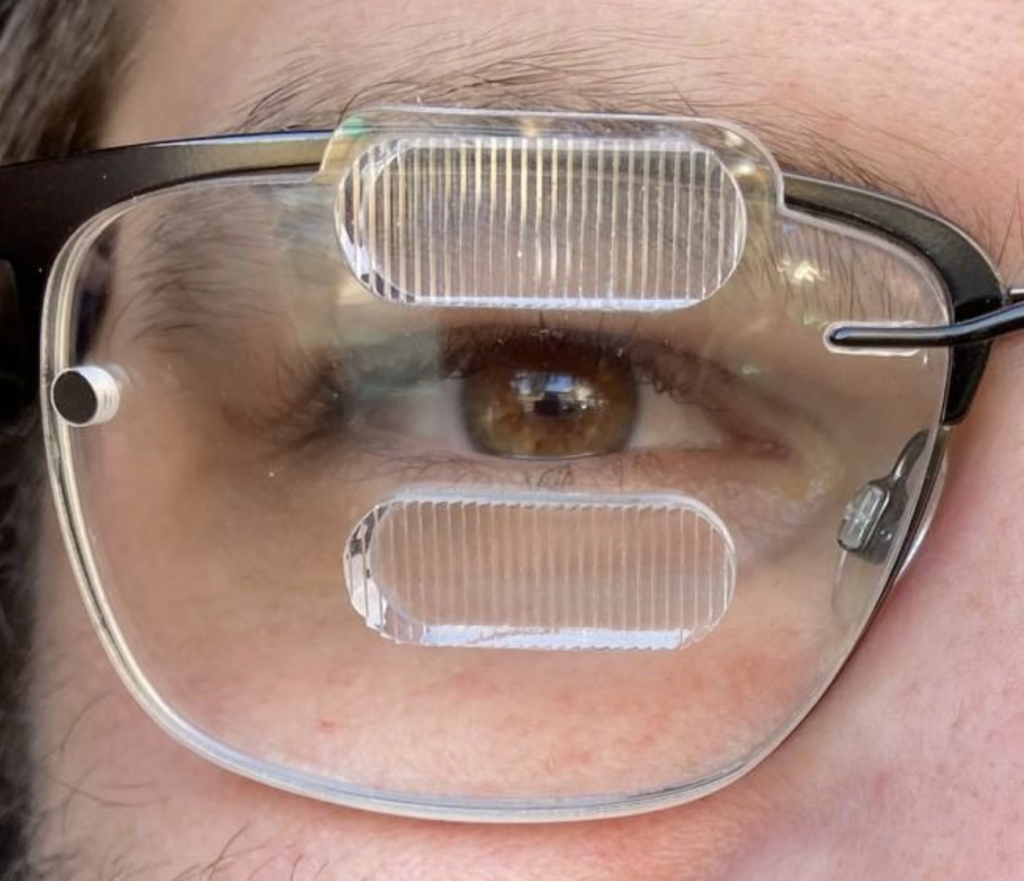
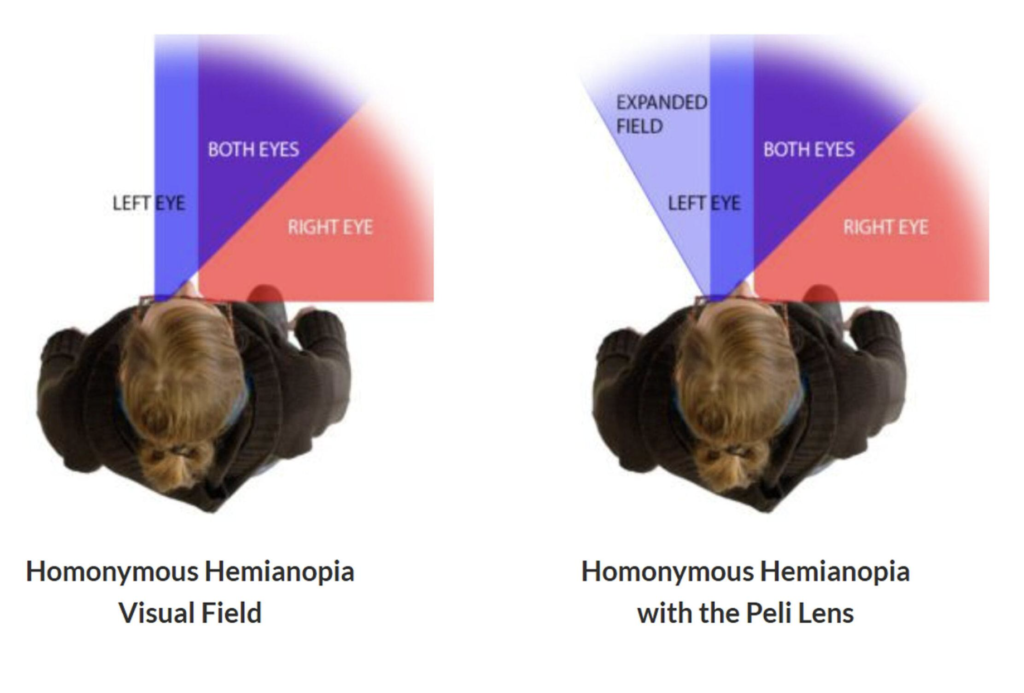
These glasses contain special prism segments that redirect light from the affected side into the remaining visual field.
For example, in someone with left-sided hemianopia, the glasses may help them notice a person approaching from the left without having to turn their head as far.
They are primarily useful for detecting obstacles while walking.
5. Computerized visual restoration training
Unlike visual scanning exercises, which teach patients to look toward their blind side, visual restoration training attempts to stimulate and retrain the brain’s remaining visual pathways.
Patients repeatedly practise identifying lights, shapes, or moving objects presented near or within the affected visual field. Some newer systems use virtual reality (VR) headsets to deliver personalised exercises. But these are newer and need to be validated in large studies for wider use.
Key Takeaways: Living Better With Hemianopia
Losing half of your vision after a stroke can make everyday activities difficult. However, even if the lost vision does not recover completely, rehabilitation can help you become more confident, safer, and more independent.
- Practise looking toward your affected side. Regular visual scanning exercises can help you become better at finding objects and noticing obstacles.
- Try online rehabilitation tools. Free programs such as Eye-Search and Read-Right may help improve visual searching and reading skills.
- Make your surroundings safer. Good lighting, clutter-free walking paths, and consciously checking your blind side can make daily activities easier.
- Consider special glasses when appropriate. Peripheral prism glasses may help some patients notice obstacles on their affected side.
Remember
Rehabilitation is not only about recovering lost vision. It is also about learning to make the best possible use of the vision you still have.
Leave a Reply