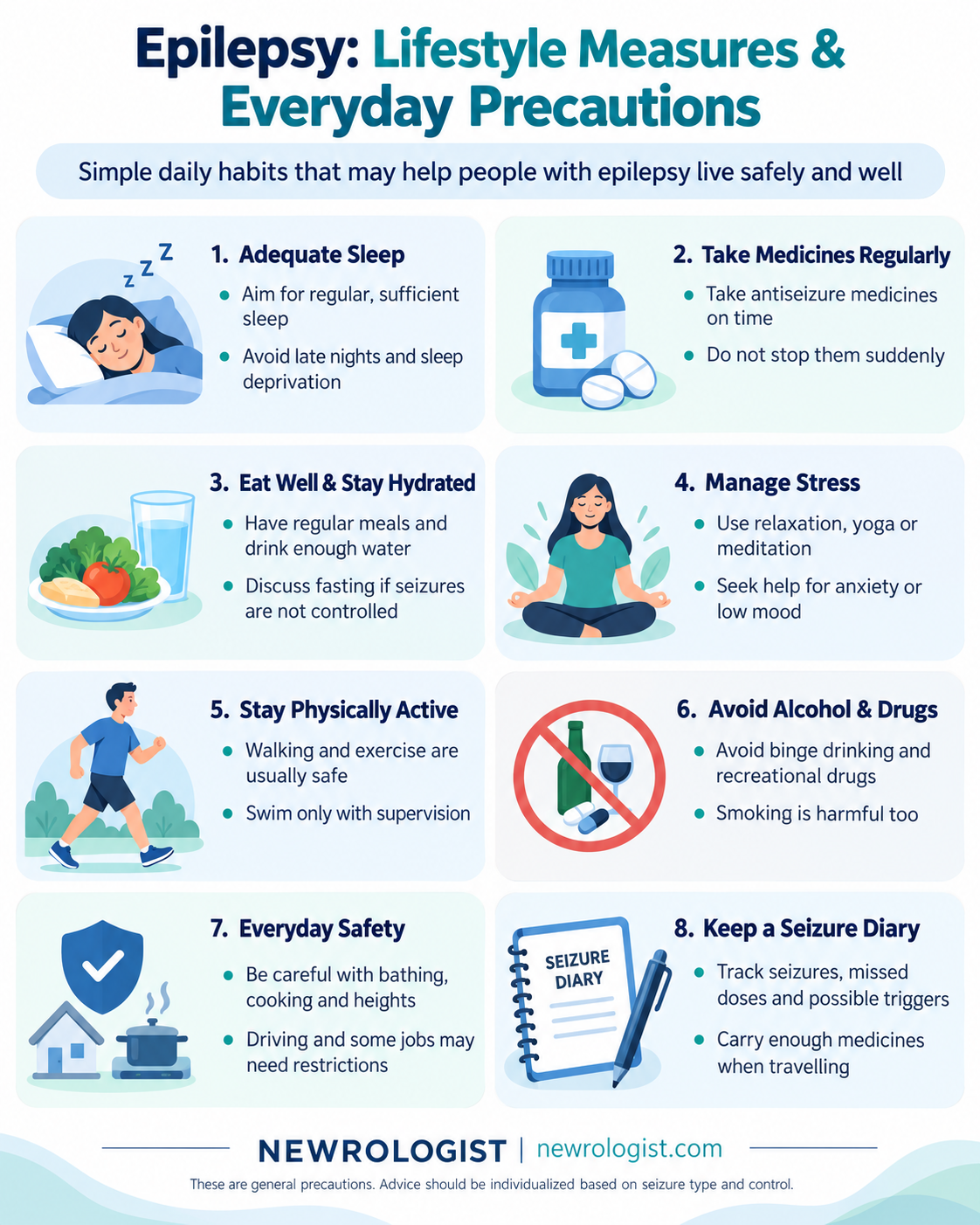
Hi, as a Neurologist, I often find patients being on multiple anti-seizure medications, some of which are avoidable. A lot of seizures are provoked by lack of sleep, alcohol binge, missing medication amongst other things. Here are a few simple daily habits which can help control your seizures!
1. Get enough sleep
A good night’s sleep is especially important for people with epilepsy. Lack of sleep can increase the likelihood of seizures, even in people who are otherwise doing well on treatment.
What can you do?
- Aim for 7–9 hours of sleep every night if you are an adult.
- Try to go to bed and wake up at approximately the same time every day, including weekends.
- Avoid frequent late nights, all-night studying, and unnecessary sleep deprivation.
- If possible, avoid rotating night shifts, particularly if you have previously experienced seizures after losing sleep.
- Reduce caffeine consumption in the evening and maintain a comfortable, quiet sleeping environment.
2. Regular medications
Missing doses, taking medicines at irregular times, or stopping treatment suddenly can lead to breakthrough seizures, even if you have been seizure-free for a long time.
What can you do?
Take your medicines at the prescribed times every day. Try linking them to regular activities, such as brushing your teeth or having breakfast and dinner.
Use reminders. Phone alarms can definitely help till you get the hang of it.
Never stop or reduce your medication on your own, even if you have not had a seizure for several years. Always consult your doctor and understand the risks and plan how to taper the drugs.
Plan ahead. Keep enough medicine available, especially when travelling or during holidays.
3. Diet and hydration:
Eating a healthy, balanced diet and drinking enough water are important for your overall health and may help you maintain better seizure control.
What can you do?
- Eat regular, balanced meals. Include vegetables, fruits, whole grains and adequate protein. You do not need a special diet simply because you have epilepsy.
- Avoid prolonged fasting if it affects your seizures. Skipping meals, dehydration and changes in sleep or medication timings during fasting may increase seizure risk in some people.
- Stay well hydrated, particularly during hot weather, outdoor work or exercise.
- Limit excessive caffeine, particularly energy drinks and large amounts of tea or coffee, especially if they disturb your sleep.
- Do not unnecessarily avoid particular foods. There is no good evidence that common foods such as milk, curd, rice, spicy food or chocolate routinely trigger epileptic seizures.
4. Try to reduce stress as much as possible
Living with epilepsy can sometimes be stressful. Worrying about when the next seizure might occur, difficulties at work or school can affect your emotional well-being.
Some people also notice that their seizures become more frequent during stressful periods.
What can you do?
- Make time to relax. Spend 10–20 minutes daily on activities you enjoy, such as listening to music, reading, gardening or spending time with family and friends.
- Try yoga, meditation or gentle breathing exercises. Basically anything you enjoy and switches your mind off for a bit.
- Exercise regularly. Walking, cycling on a stationary bicycle or other suitable physical activities can improve mood and sleep. BUT please note: always be in a safe environment and preferable not alone.
- Maintain a regular routine. Planning your day and avoiding unnecessary sleep deprivation can make stressful periods easier to manage.
5. Stay physically active
Having epilepsy does not mean you need to avoid exercise. Most people with epilepsy can safely participate in regular physical activities and many sports.
What can you do?
- Exercise regularly. Walking, jogging, yoga, dancing, badminton and many team sports are generally safe.
- Aim for around 20-30 minutes of any activity like a walk or yoga.
- Stay hydrated and avoid excessive exhaustion, particularly during hot weather.
- Take precautions at the gym. If your seizures are not well controlled, avoid lifting heavy weights alone, especially without a spotter.
- Be careful with swimming. Never swim alone. Swim only with appropriate supervision from someone.
6. Avoid excessive alcohol, smoking and recreational drugs
Alcohol, tobacco and recreational drugs can affect your health and may make epilepsy more difficult to manage.
What can you do?
- Avoid binge drinking and heavy alcohol consumption. These can increase seizure risk, particularly as alcohol levels fall after drinking.
- Avoid recreational drugs, such as cocaine, ecstasy and other stimulants, which can provoke seizures.
7. Stay safe during everyday activities
Having epilepsy does not mean you have to stop doing your usual activities. A few simple safety measures can help prevent injuries if a seizure occurs.
What can you do?
- Bathing: If you have uncontrolled seizures, avoid locking the bathroom door and consider informing someone at home before bathing.
- Cooking: Take care around gas stoves, hot oil and boiling water. If seizures are uncontrolled, consider cooking when someone else is around.
- Heights and machinery: Avoid working on rooftops, ladders, unprotected balconies or operating dangerous machinery if you have seizures that may cause sudden loss of awareness or control.
- Driving: Seizures while driving can endanger you and others. Do not drive if you have active seizures, and we’ll discuss this in detail in a seperate article.
- Mobile phones and television: If you have photosensitivity which might have been detected on your EEG or otherwise, avoid flashing visuals.
8. Keep a seizure diary and plan ahead
Keeping track of your seizures and planning for situations that may disrupt your routine can make epilepsy easier to manage.
What can you do?
- Maintain a seizure diary. Record the date, time, type and duration of your seizures, along with any unusual symptoms before or after them.
- Look for possible triggers. Note missed medications, poor sleep, stress, illness, alcohol consumption or menstrual periods, if relevant.
- Record medication changes and side effects. Note any changes including excessive sleepiness, rashes, dizziness, behavioural changes amongst others to inform your doctor.
- Prepare for travel. Carry enough medication for your trip, preferably with some extra supply, along with a prescription or medication list.
There are other things to discuss like what to do when someone has a seizure (and what not to!), how to know if it’s a seizure mimic and not a seizure, what is aura?, and other things. We’ll cover these in subsequent articles! Stay tuned…
And Remember: Living with epilepsy doesn’t mean living in fear. With appropriate treatment, healthy routines and sensible precautions, most people with epilepsy can study, work, exercise and enjoy their lives.
Leave a Reply